The Power of Less: How Scarcity Shapes Every Decision You Make

A Summary of Chapter 6 from Influence by Robert B. Cialdini
What if the secret to wanting something more had nothing to do with what it actually was and everything to do with how available it seemed? In Chapter 6 of Influence, Robert Cialdini unpacks one of the most quietly devastating forces in human psychology: scarcity. The principle is simple. We place greater value on things that are rare, fleeting, or at risk of being taken away. And the less available something becomes, the more desperately we want it.

The Art of the Almost-Lost Deal

Consider a divorce lawyer who spent years struggling to get couples to agree on settlement terms. Despite presenting identical proposals, she found clients stubbornly resistant — until she made one subtle change in how she framed the moment of decision. The old version went: “All you have to do is agree to the proposal, and we will have a deal.” The new version flipped the sequence: “We have a deal. All you have to do is agree to the proposal.”

The result? A near-perfect success rate. The reason is rooted in loss aversion. In the original phrasing, clients imagined themselves agreeing and therefore potentially giving something up. In the revised phrasing, the deal already existed in their minds — and refusing meant losing it. People will fight far harder to keep something they believe they already have than to gain something new. The lawyer didn’t change the terms. She changed what was at stake.

Midnight Lineups and Louis Vuitton Purses

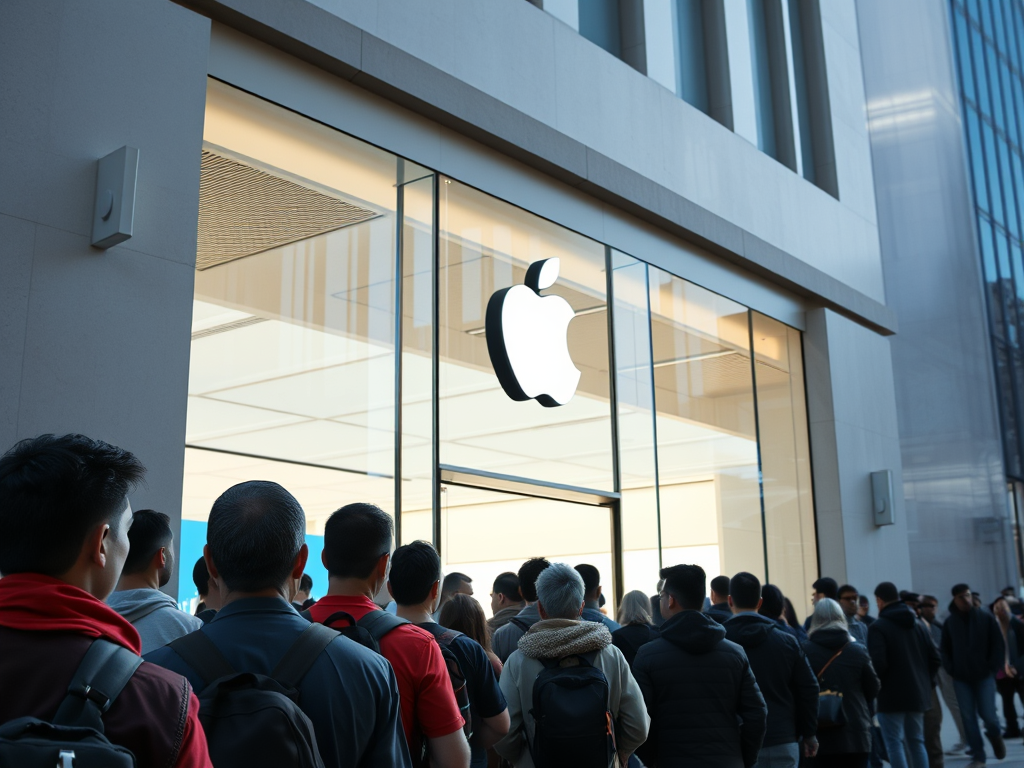
Apple understands scarcity better than almost any company on earth. When a new iPhone launches with “limited supply” in stores, it does not simply create demand — it manufactures urgency. Long lines form overnight. Social media fills with stories of people who camped out, traded favors, and made bizarre sacrifices just to be among the first to get their hands on the device.

One story stands out particularly well. A woman waiting in line spotted someone just two spots ahead of her and offered to trade her Louis Vuitton handbag for their place in line. The rational mind would question this trade. But in a scarcity mindset, logic yields to the terror of missing out. The possibility of not getting the iPhone — of losing the opportunity — outweighed the objective value of a luxury bag. That is the power Cialdini is describing: not just desire, but the fear of deprivation.

Loss Looms Larger Than Gain

Research confirms what common experience hints at: the pain of losing something is significantly more motivating than the pleasure of gaining something of equal value. In one striking study, team members were found to be 82% more willing to cheat in order to prevent their team from losing status than they were to cheat in order to gain it. The asymmetry is striking. We are not rational optimizers seeking the best outcome — we are loss-averse creatures wired to protect what we already have.

This is why companies that frame their messaging around what customers stand to lose — rather than what they might gain — consistently outperform those that don’t. Health organizations encouraging cancer screenings have found dramatically better results when they ask people not to lose the chance to be healthy, to retain the ability to be present for life’s special moments, rather than simply promoting the benefits of early detection. The framing of loss is simply more compelling to the human mind.

The eBay Dad, the Countdown Clock, and the Three-Call Con

Scarcity operates through two distinct triggers: limited quantity and limited time. A father selling his collection of rare trading cards on eBay discovered this firsthand. When he listed all his cards at once, bids remained modest and interest was lukewarm. But when he staggered the listings — releasing one card at a time with gaps between each — the sense of rarity transformed his results entirely. The same cards, the same buyers, but a completely different outcome driven by perceived scarcity.

Deadlines exploit the same mechanism. When a window of opportunity appears to be closing, people stop deliberating and start acting. This urgency, Cialdini warns, is precisely what unscrupulous salespeople exploit. One chilling example involves a fraudulent investment scheme built on a “three-call method.” The first call is purely informational, delivered under the name of an impressive-sounding company. The second call reports remarkable profits — but regretfully notes that the investment window has closed. Then comes the third call: an exclusive opportunity, available only now, for a limited time. One man, caught in this manufactured urgency, handed over his entire life savings. The genius of the scheme was not greed — it was the engineered fear of missing out.

Freedom, Toddlers, and the Psychology of Reactance

Why does scarcity work at all? Cialdini points to two deeply rooted psychological forces. The first is a reasonable heuristic: things that are hard to obtain are often genuinely better. Rare materials, exclusive access, and limited editions frequently do represent superior quality. The second force is more primal — we hate losing our freedom to choose.

This psychological reactance — the instinct to push back when options are restricted — explains two of life’s most famously difficult developmental stages. At around age two, children first discover that they have independent will. Take something away, and they want it fiercely. Teenagers experience a second surge of this same impulse as they form their identities against the limits imposed by parents and society. Both stages are marked not by irrationality, but by an acute sensitivity to the loss of autonomy.

New Scarcity Hits Hardest

Cialdini closes with a crucial nuance: it is not just scarcity that inflames desire, but newly emerging scarcity. When something that was once plentiful starts to disappear, people react far more intensely than if it had always been rare. The sense of loss is compounded by the contrast with what was previously available. This is why rising restrictions, shrinking stock, and expiring offers trigger such powerful responses — the mind is not just registering scarcity, it is registering loss in motion.

Understanding scarcity means recognizing it everywhere — in the countdown timer on a checkout page, in the “only 3 left in stock” label, in the exclusive offer expiring at midnight. These are not coincidences. They are carefully engineered triggers aimed at the most ancient part of our decision-making brain: the part that is far more afraid of losing than it is excited about winning.

The Power of Social Proof: A Summary of Chapter 4 from Cialdini’s “Influence”

Introduction: We Are the Herd

In Chapter 4 of “Influence: The Psychology of Persuasion,” Robert Cialdini explores one of the most powerful principles of human behavior: social proof. The central idea is simple yet profound—when we’re uncertain about what to do, we look to others for guidance. We assume that if many people are doing something, it must be the correct thing to do.

How Social Proof Shapes Our Daily Decisions

Social proof is constantly in our lives, often without our awareness. When you’re scanning a restaurant menu and notice that certain dishes are labeled “most popular” or “customer favorite,” you’re more likely to order them—especially if you’re unsure what to choose. The same principle applies to Netflix’s “Trending Now” section or products marked as “bestsellers.” When faced with uncertainty, we defer to the crowd’s wisdom.

This isn’t limited to trivial choices. The principle of social proof works because it satisfies three psychological needs: validity (if lots of people like something, we’ll probably like it too), feasibility (if we see many people doing something, we believe we can do it too), and social acceptance (we feel more comfortable doing what others are doing). It’s not just persuasion—it’s “peer-suasion.”

Social Proof Heavily Influences

While social proof often serves us well, it can also lead to troubling outcomes. Cialdini points out that when people believe a behavior is common, they’re more likely to engage in it—even if it’s harmful. This explains phenomena like drinking and driving becoming normalized in certain social circles.

During the COVID-19 pandemic, social proof played out dramatically. People initially didn’t wear face masks when presented with the potential risks there may be. Peer-suasion is what made mask-wearing increase significantly, once individuals saw their peers adopting the behavior. Social proof was the biggest factor in people conforming.

The Marketing Power of Scarcity Through Social Proof

Businesses cleverly leverage social proof to drive sales. Cialdini describes a Toyota dealership that dramatically increased sales by stating they needed “help” because demand for their vehicles had exceeded their inventory. The message wasn’t “buy now before we run out”—it was “so many people want this that we can’t keep up.” This subtle difference made all the difference, as it combined scarcity with powerful social validation.

When Beliefs Fail: The Paradox of Cults

One of the most counterintuitive findings Cialdini presents is what happens when cult prophecies fail. Logic would suggest that when a cult’s predictions don’t come true, members would leave. Instead, the opposite often occurs—the cult strengthens. Why? Because once their beliefs are publicly falsified, members desperately need validation. They can’t find it in the correctness of their predictions, so they seek it in numbers instead.

Cults that were previously exclusive and secretive suddenly become aggressive recruiters. The logic is simple but psychologically powerful: if enough people believe something, it must have validity—even if reality proves otherwise.

The tragic example of The People’s Temple illustrates social proof’s most extreme consequences. This cult, composed largely of poor individuals from San Francisco who relocated to Guyana, South America, ended in mass suicide. When the leader, fearing arrest after the murder of four investigators, called for everyone to drink poison, most complied without question. The unfamiliar environment of Guyana made members more dependent on the leader and each other for behavioral cues. People learned that the “correct” behavior was to take their turn drinking poison by watching their peers do so.

The Bystander Effect: When Social Proof Paralyzes

Social proof doesn’t just drive action—it can also prevent it. When emergencies occur in public, people often fail to help because they’re uncertain and look to others for guidance. When everyone else appears calm or inactive, each person interprets this as evidence that no help is needed.

Cialdini’s solution is specific and actionable: don’t rely on the crowd to act. If you need help, make it explicit. Point to a specific person and give them a specific task: “You in the blue shirt—call 911 now” or “Someone is following me, and I need help.” This cuts through the uncertainty and social proof paralysis by assigning clear responsibility.

The Similarity Factor: We Follow Those Like Us

We don’t just follow anyone—we’re particularly influenced by people similar to ourselves. Doctors, for instance, are unlikely to reduce overprescribing antibiotics simply because they know it’s problematic. However, when they learn that their prescription rates exceed those of their peers, behavior changes rapidly. The comparison to similar others is what motivates action.

This similarity effect explains a disturbing phenomenon Cialdini documents: following news coverage of suicides, car and plane accident rates increase by approximately 1,000% in the following month. Research revealed these weren’t just accidents—they were copycat suicides. People who identified with the suicide victims found themselves in similar emotional states and situations, leading them to end their lives in ways that appeared accidental.

Historical Manipulation: Manufactured Social Proof

The power of social proof has been understood for centuries. In the 1800s, theater producers would hire audience members specifically to clap and cheer, knowing that others would join in. Once a few people start clapping, the snowball effect takes over—creating the impression that the performance was genuinely well-received.

The Messaging Mistake: When Statistics Backfire

Finally, Cialdini warns against a common error in public messaging. Many campaigns try to discourage negative behaviors by emphasizing how common they are: “X% of people litter in national parks” or “Teenage drinking is at an all-time high.” The intention is to shock people into better behavior.

Instead, these messages backfire. When people hear that “so many people are doing this bad thing,” they focus on the social proof—not the moral judgment. The message inadvertently normalizes the very behavior it aims to prevent. The solution is to emphasize the desired behavior instead: highlight how many people are making good choices, not how many are making bad ones.

Conclusion

Social proof is one of the most powerful forces shaping human behavior. Understanding it helps us recognize when we’re being influenced—and when we might be making decisions based on the crowd rather than our own judgment. The key is awareness: sometimes following the herd serves us well, but sometimes we need to think independently.